On Friday evening, when the doors opened on the public reception, one work in the exhibition was not hanging on a wall. It moved through the room.
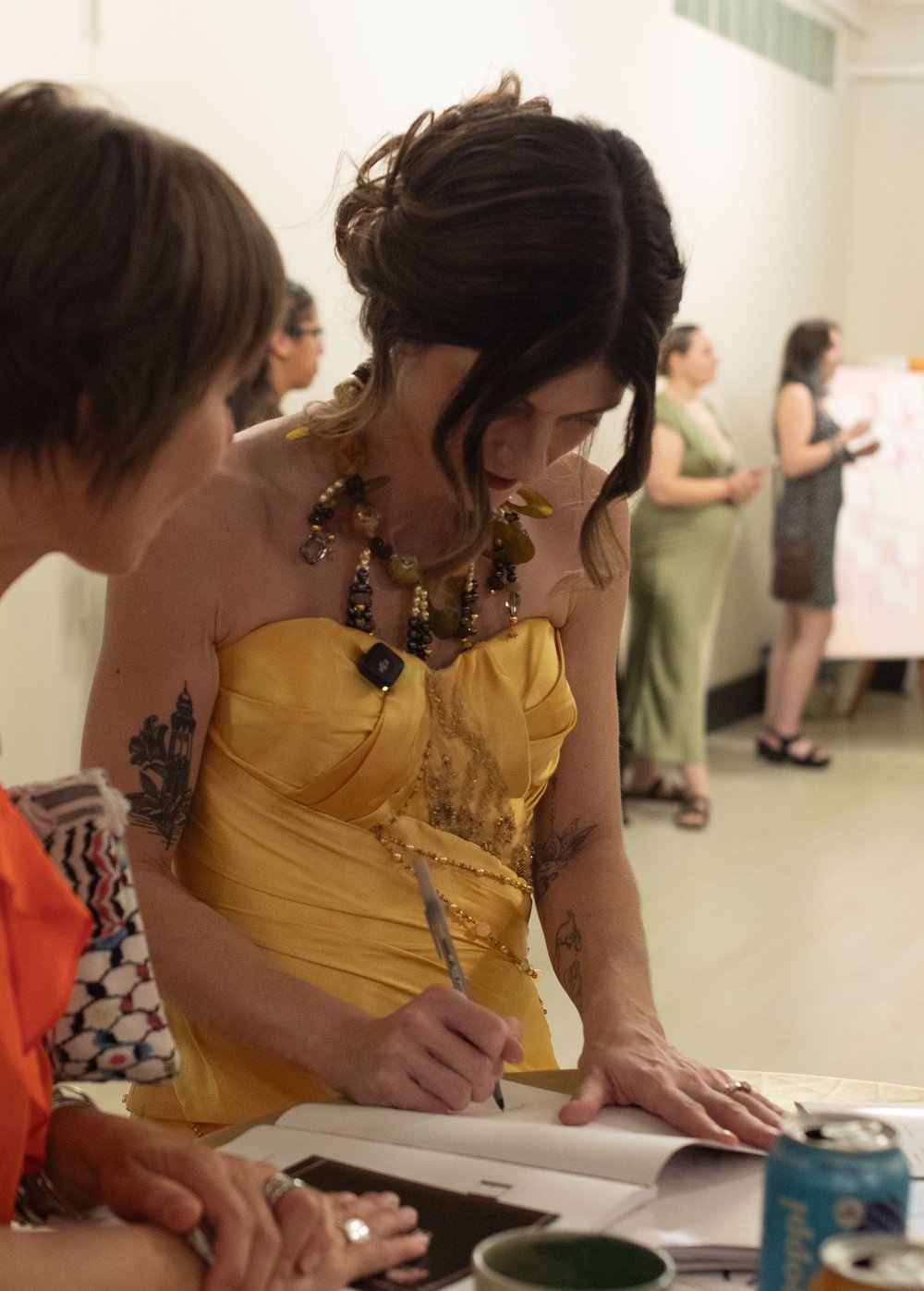
Every other work inside FLARE translated the experience of endometriosis into paint, sculpture, photograph or installation. This one translated it into something a person could put on. Alexandra Totillo, a fashion designer and Pratt Institute student, was commissioned to make a garment for Priscilla Smith to wear at the Opening Reception — made around the disease rather than around an occasion, and meant to be read as an artwork in its own right.
The necklace that completed it was made by Sara Gay, the New York jewelry artist under whom Totillo trained and worked. The two pieces were designed as complements rather than as an outfit: one artwork in two parts, by two women at opposite ends of a working life.
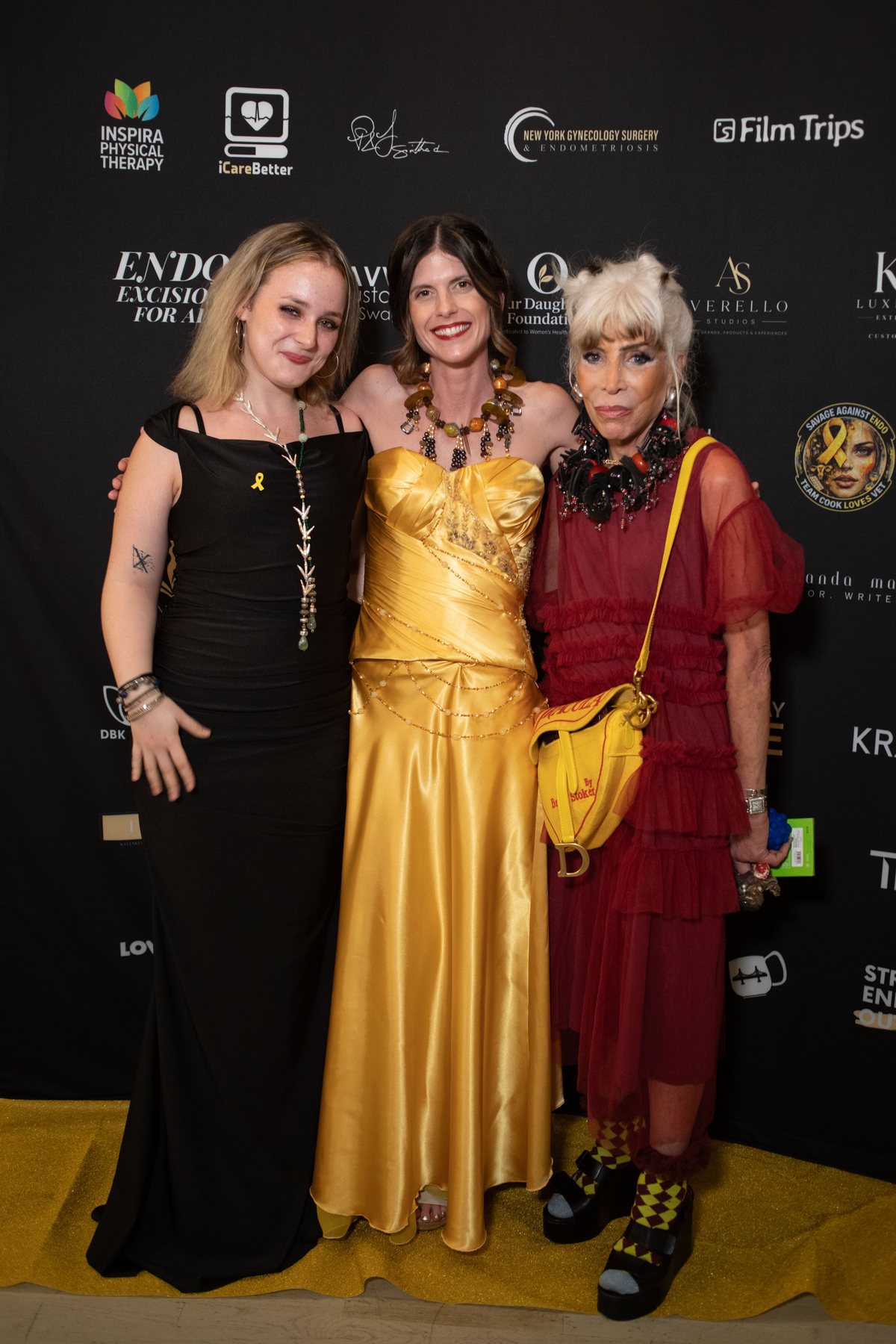
Endometriosis lives inside the body and is judged from the outside — by employers who see someone who looks well, by clinicians who find nothing on a scan, by strangers with no reason to imagine what is happening beneath the surface. A garment sits exactly on that line. It is what the world sees first.
“I spent years being looked at and not being seen. This is the first time I get to decide what people see.”
Priscilla Smith, Founder & Creative Director, FLARE
The designer
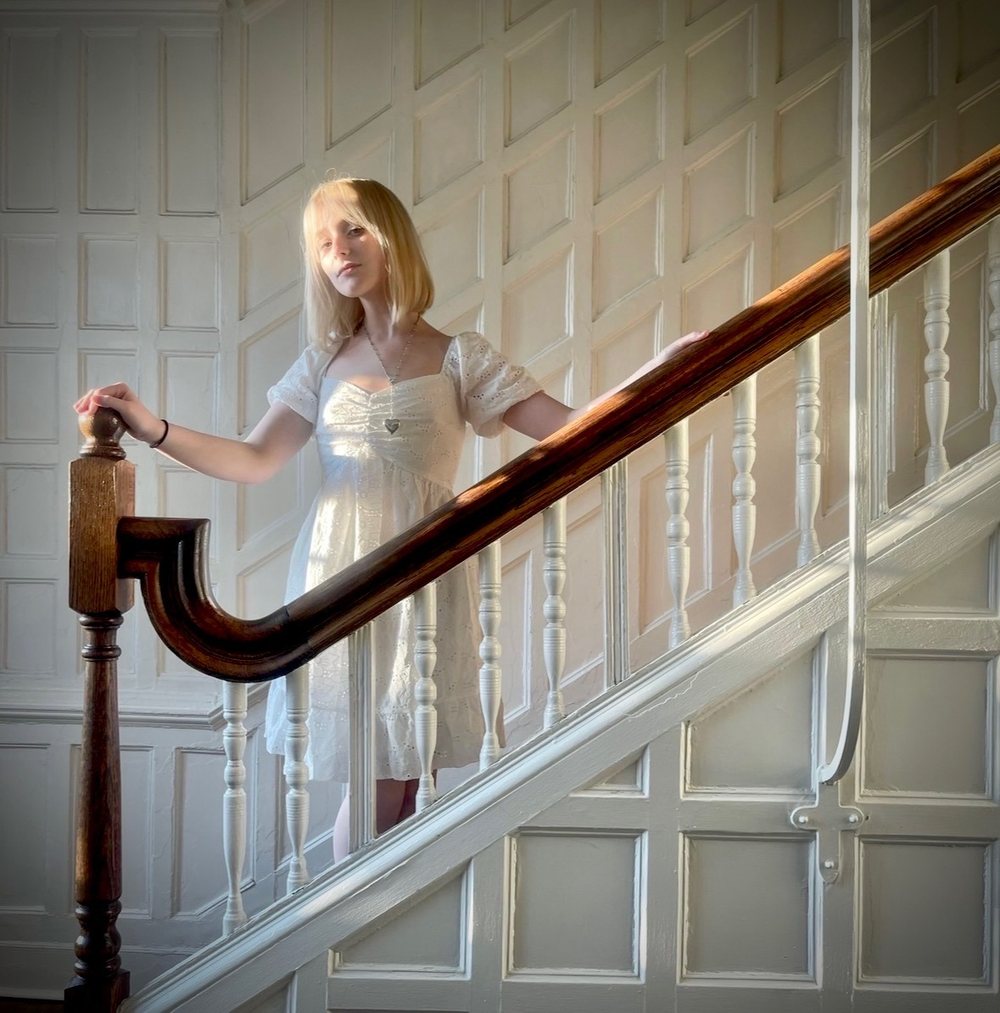
Alexandra Totillo is from East Islip, New York, and studies fashion design at Pratt Institute, with a minor in photography. Her work returns again and again to girlhood, femininity, memory and the female body — garments built to be read rather than simply worn.
She arrived at that subject through her own illness. At eighteen, shortly after committing to Pratt, she was diagnosed with a rare cancer; she had surgery, moved to Brooklyn nineteen days later and began classes on schedule. She remains in remission. She does not have endometriosis and does not claim to speak for anyone who does. What she shares is the argument about young women’s health, and what a better version of it would look like. FLARE made that argument in paint and sculpture. She made it in fabric.
“I learned early that I had to become my own hero. If something mattered to me, I had to push for it.”
Alexandra Totillo, designer
The jewelry artist
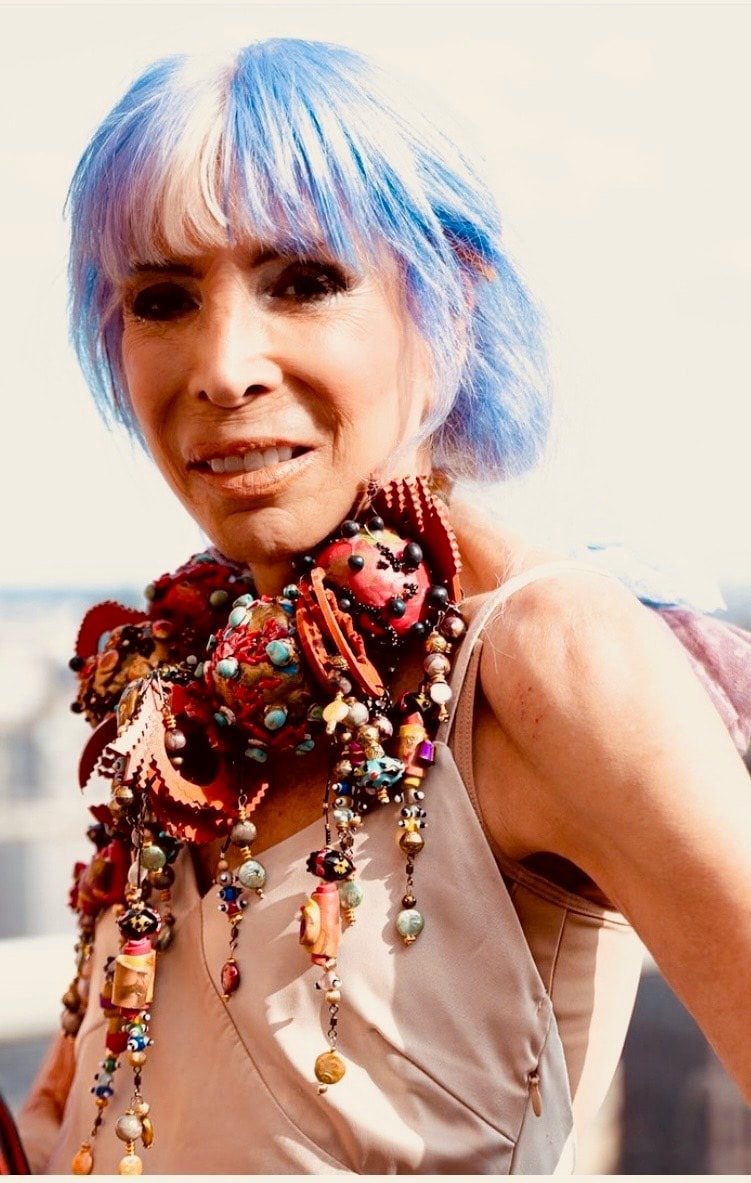
Sara Gay was born in New York and studied jewelry making in her twenties, and art at NYU and the New School, before setting it aside to raise her children and complete a teaching career. When her daughters left for college she went back: stained glass, then welding. That vocabulary of glass, metal, heat and join is still legible in what she makes now — one-of-a-kind necklaces, bracelets and earrings in semi-precious stone, vintage bead, found material and unusual metal. She does not make the same object twice.
She has lived with endometriosis for decades, and in a long career had never made a piece drawn from that experience. The necklace she made for FLARE was the first.
saragayart.com (opens in a new tab)
The timing
FLARE opened in the days immediately after New York Fashion Week. For one week each September the city gives its full attention to the body — how it is dressed, framed, lit and looked at. Two days later, near Union Square, the attention turned inward: to what is happening inside the bodies fashion week photographs, and why it has gone unseen for so long.